Recovery
How can a busy man sleep better without a perfect routine?
You do not need a ninety-minute wind-down ritual. What the sleep guidelines actually say, the few habits that do most of the work, and when poor sleep is a medical question rather than a discipline one.
Drafted for review by Dr. LaMar Sheppard, DC · September 3, 2026 · 5 min read
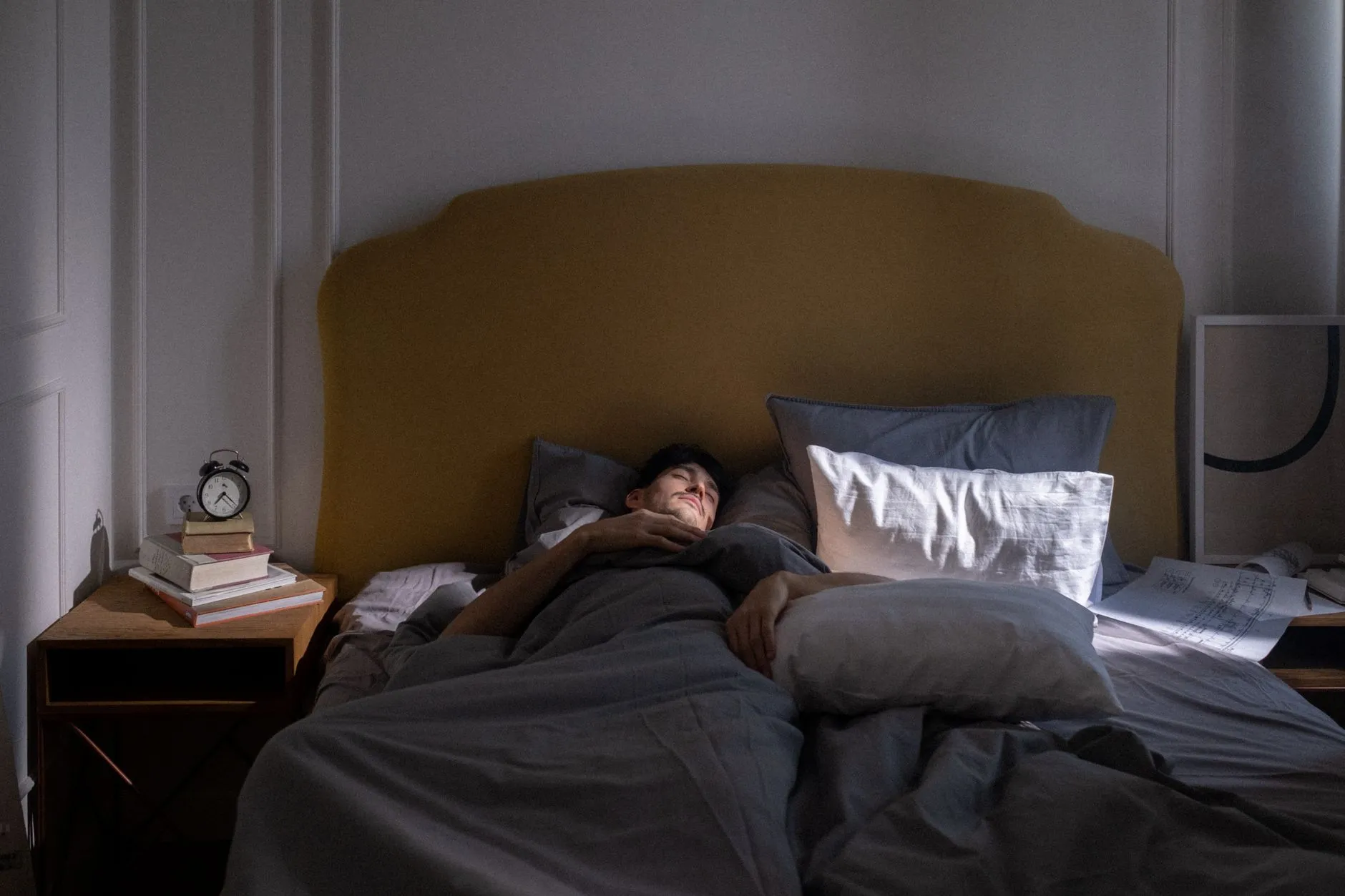
Most sleep advice is written for someone with an empty evening. A dimmed house, a book, no phone after eight, a bath, a consistent bedtime every night of the year.
That is not the life of a man running a company, catching a six o’clock flight twice a week, and eating dinner with his family at eight. So he reads the advice, recognises none of it as possible, and does nothing.
This article is the other version: what the guidelines actually require, the three or four habits that do most of the work, and the point where sleep stops being a routine problem and becomes a medical one.
How much sleep do you actually need?
Seven or more hours a night, on a regular basis. That is the joint recommendation of the American Academy of Sleep Medicine and the Sleep Research Society for adults, and regularly sleeping less than seven hours is associated with worse health outcomes. The word that matters most in that sentence is not “seven”. It is “regular”.
The 2015 consensus statement came from a panel of fifteen sleep experts who reviewed the evidence across nine health categories, as the AASM’s announcement describes. The panel also noted that individual need varies with genetics, behaviour, medical conditions and environment. Seven is a floor for most adults, not a target to scrape past.
For a man who averages six hours midweek and “catches up” with nine on Saturday, the average looks fine and the pattern is not. Consistency is the lever most people skip.
Why does sleep matter so much for training after 45?
Because recovery is where training turns into progress, and sleep is where most of recovery happens. Train hard on short sleep and the same session costs more and returns less. For men managing an old injury, poor sleep also tends to make pain feel louder, which quietly shrinks what you are willing to do in the gym.
This is why Foundation 90 treats recovery as a trainable system rather than a rest day. Sleep, down-regulation, breathing mechanics and load management are programmed, not hoped for. A nervous system held in high output shows up as a stiff back, short sleep, a short fuse and a body that never fully settles.
It is also why the program tracks it. Sleep duration, consistency and recovery status come from your wearable, next to the training data, so you can see the connection rather than take it on trust.
What are the few habits that do most of the work?
A consistent wake time, daylight early in the day, a cut-off for caffeine and alcohol, and a short, repeatable wind-down. None of these requires a perfect evening. Together they give your body a rhythm to settle into, which matters more than any single sleep hack.
In order of return on effort:
- Fix the wake time first. Get up at the same time seven days a week, within about half an hour. A fixed wake time anchors everything else, including when you get sleepy.
- Get daylight early. Ten minutes outside in the morning, even on a grey day, helps set your internal clock. On travel days this does more than any supplement.
- Move caffeine earlier. Many people find that caffeine after early afternoon costs them sleep they never notice losing.
- Be honest about alcohol. A drink can help you fall asleep and still cost you the second half of the night. Watch your own wearable data on the nights you drink and the nights you do not.
- Build a ten-minute wind-down you can do anywhere. Same sequence every night: a few minutes of slow breathing, lights down, phone out of reach. Ten minutes you actually do beats ninety you never start.
What about the nights that go badly?
They will. A late dinner, a hard conversation, a red-eye. The plan is not to have zero bad nights. It is to keep the wake time, get the daylight, and not try to “fix” it with a long lie-in that shifts the next night too.
Does evening training ruin sleep?
It depends on the person, which is why your own data beats a general rule. Some men sleep deeply after an evening session. Others lie awake wired. Track sleep against training time for two or three weeks and you will know which one you are.
For the ones who do lie awake, the answer is rarely to stop training in the evening, because for many executives it is the only slot that exists. It is usually a longer cool-down, easier conditioning instead of hard intervals late in the day, and a breathing routine before bed.
Should you trust your wearable’s sleep score?
Trust the trend, not the night. Wearables are good at showing consistency and change over weeks: whether your average is drifting down, whether travel weeks look different, whether alcohol nights stand out. A single night’s score is noise, and some people sleep worse once they start chasing it.
In Foundation 90 the wearable data sits next to training and joint scores for exactly this reason. One number read in isolation says very little. Three numbers read together over four weeks usually say something clear.
When is poor sleep a medical question rather than a habit one?
When the pattern suggests a sleep disorder, or when insomnia has lasted for months despite reasonable habits. Loud snoring with gasping, waking unrefreshed after enough hours, or long-running insomnia are reasons to see your physician. The treatment for chronic insomnia is well established, and it is not a sleeping pill first.
The American College of Physicians recommends cognitive behavioral therapy for insomnia, known as CBT-I, as the first-line treatment for chronic insomnia in adults. It combines sleep scheduling, stimulus control and work on the thoughts that keep people awake. It is delivered by trained clinicians and increasingly through structured digital programs.
The warning signs worth a conversation with your physician:
- loud snoring, choking or gasping at night, often noticed by a partner
- falling asleep easily during the day despite what should be enough sleep
- insomnia most nights for three months or more
- restless, uncomfortable legs in the evening that improve with movement
Coaching can build the routine. It cannot rule out a sleep disorder, and it should not try.
What does good-enough sleep look like on the road?
The same wake time, adjusted gradually to the new time zone, daylight on arrival, a hard stop on caffeine, and your ten-minute wind-down in the hotel room. Travel breaks routines. It does not have to break the rhythm, and the rhythm is what protects the rest of the week.
Foundation 90 gives every phase a travel version: training, food and sleep, planned for the trip rather than abandoned during it. The training half of that is in the forty-minute hotel gym plan.
The short version
Aim for seven or more hours, and protect consistency above everything. Anchor the wake time, get early daylight, move caffeine and alcohol earlier, and keep a ten-minute wind-down you can do anywhere. Read your wearable as a trend. And if you snore loudly, wake unrefreshed, or have struggled for months, that is a conversation for your physician, not a new routine.
If you want your sleep, training and joints looked at as one picture, that is what The Baseline is for.
Quick answers
1 How much sleep does an adult actually need?
The American Academy of Sleep Medicine and Sleep Research Society recommend that adults sleep seven or more hours per night on a regular basis. Regularly sleeping less than seven hours is associated with adverse health outcomes.
2 What is the most effective treatment for chronic insomnia?
The American College of Physicians recommends cognitive behavioral therapy for insomnia, known as CBT-I, as the first-line treatment for adults with chronic insomnia. It combines sleep scheduling, stimulus control and changing unhelpful thoughts about sleep.
3 Does training late in the evening ruin sleep?
It varies by person. Some men sleep fine after an evening session and some do not. Track your sleep against training time for a couple of weeks and let your own numbers decide rather than a general rule.
4 Should I trust my wearable's sleep score?
Treat it as a trend, not a verdict. Wearables are most useful for spotting consistency and changes over weeks. A single night's score is noise, and chasing it can make sleep worse.
5 When is poor sleep a medical issue?
Loud snoring, gasping or choking at night, waking unrefreshed despite enough hours, or insomnia lasting months are reasons to talk to your physician rather than adjust a routine. Some sleep disorders need proper testing.
Sources
- Watson NF et al. Recommended Amount of Sleep for a Healthy Adult: A Joint Consensus Statement of the American Academy of Sleep Medicine and Sleep Research Society. Journal of Clinical Sleep Medicine, 2015
- American Academy of Sleep Medicine. AASM and SRS publish new sleep duration consensus statement (2015)
- Qaseem A et al. Management of Chronic Insomnia Disorder in Adults: A Clinical Practice Guideline From the American College of Physicians. Annals of Internal Medicine, 2016
General information, not medical advice. Licensed to practice chiropractic in California. Coaching services are provided nationwide and are not a substitute for medical care from your own physician. Prescribing decisions rest with a licensed physician.